Sensory Strategies for Autism: Post-RAADSR Guide
Sensory processing differences are a common experience for many autistic individuals. They often show up as a key indicator in the results of assessments like the RAADSR test. Have you recently completed the RAADSR test and noticed high scores in the sensory domains? If so, you are likely looking for practical ways to navigate what can feel like overwhelming sensory experiences. This guide is here to help.
This article combines expert knowledge with real-world experience. We will explore proven sensory management techniques and simple environmental changes. These strategies can transform daily life from overwhelming to manageable. If you haven't yet explored your sensory profile, a great first step is to take our test. Whether you are an adult learning about your own sensory world or a parent supporting a child, these tips can help you create a more comfortable and balanced environment.

Understanding Your RAADSR Sensory/Motor Subscale Results
Completing an assessment is the first step, but understanding the results is what empowers you to make changes. The Sensory/Motor subscale of the RAADSR test specifically looks at your unique responses to sensory input. This can include anything from sounds and lights to textures and tastes.
What Do Your Sensory Scores Indicate?
A higher score on the RAADSR Sensory/Motor subscale suggests that you may experience the world differently than neurotypical individuals. This is not a "good" or "bad" thing; it simply means your brain processes sensory information in a unique way.
These experiences can fall into two main categories:
- Hypersensitivity (Over-Responsive): You might find common sounds unbearably loud, bright lights painful, or certain clothing textures irritating. This can lead to sensory overload, where your brain feels overwhelmed and needs to shut down or escape the situation.
- Hyposensitivity (Under-Responsive): You might crave intense sensory input. This could look like a desire for spicy foods, loud music, deep pressure hugs, or constant movement. You might not notice pain or temperature changes as readily as others.
Many autistic people experience a mix of both. You might be hypersensitive to sound but hyposensitive to touch. Understanding your specific profile is key to finding the right strategies.
The Science Behind Sensory Processing Differences
Sensory processing is how our nervous system receives messages from our senses and turns them into responses. For most people, this process is automatic and filters out irrelevant information. For autistic individuals, this filter may work differently.
Research suggests that autistic brains have unique neural connections. This can lead to an influx of unfiltered sensory data. Imagine trying to have a conversation in a room where every single sound—the hum of the air conditioner, a distant car, the rustle of clothes—is at the same volume. This is a common experience of sensory overload. These differences are a core part of autistic neurology, not a behavioral choice. Recognizing this is the first step toward self-compassion and finding effective solutions.
Creating a Sensory-Friendly Environment
Your home should be a safe haven, a place where you can recharge your sensory batteries. By making a few intentional changes, you can significantly reduce daily sensory stress. This is about creating a space that works for you, not against you.
Home Modifications for Sensory Comfort
Creating a sensory-friendly home doesn't require a major renovation. Small, thoughtful adjustments can make a world of difference. Start by identifying your biggest sensory triggers at home and addressing them one by one.
Here are some ideas to get you started:
-
Lighting: Replace harsh fluorescent bulbs with warm, incandescent, or dimmable LED lights. Use lamps instead of overhead lighting to create softer pools of light. Blackout curtains can be a lifesaver in bedrooms for blocking out intense sunlight.
-
Sound: Place soft furnishings like rugs, curtains, and pillows to absorb echoing sounds. A white noise machine can help mask jarring background noises. Noise-canceling headphones are an essential tool for many autistic people, allowing for instant quiet when needed.
-
Textures and Clutter: If you are sensitive to touch, choose soft, natural fabrics for bedding and clothing. Organize your space to reduce visual clutter, which can be just as overwhelming as noise. Use storage bins and cabinets to keep surfaces clear.
-
Scents: Opt for unscented cleaning products and laundry detergents. If you enjoy scents, use natural essential oil diffusers with calming aromas like lavender or chamomile, but avoid strong, artificial air fresheners.

Sensory-Friendly Bedtime Routines
Sleep can be a major challenge when your sensory system is on high alert. A calming bedtime routine signals to your brain that it's time to wind down. The goal is to reduce sensory input and promote relaxation. Try incorporating these elements into your routine: dim the lights, use weighted blankets for deep pressure input, take warm baths with Epsom salts to relax muscles, and maintain consistent sleep and wake times to regulate your body's internal clock.
If you are just beginning to understand your sensory needs, the insights from an assessment can be invaluable. You can start your journey today with our free online tool.
Sensory Strategies for Daily Life
The world outside your home can be a sensory minefield. Grocery stores, public transport, and open-plan offices are often loud, bright, and unpredictable. Developing coping strategies for these environments is crucial for participation and well-being.
Managing Sensory Overload in Public Spaces
Feeling overwhelmed in public is a common experience, but you can prepare for it. The key is to have a "sensory toolkit" ready before you even leave the house. This gives you a sense of control and a plan for when things get too intense.
Your toolkit might include:
-
Noise-Canceling Headphones or Earplugs: These are essential for managing auditory overload. You can listen to calming music, a podcast, or simply enjoy the silence.
-
Sunglasses or a Hat: Tinted lenses can reduce the glare of harsh indoor lighting and bright sunlight. A hat with a brim provides a visual shield.
-
Fidget Tools: A small, discreet fidget toy can provide a calming sensory outlet for nervous energy.
-
Planning Ahead: If possible, visit stores or run errands during off-peak hours. Look at maps of large venues beforehand to plan your route and identify quiet areas where you can take a break.

Workplace Sensory Accommodations
Workplace accommodations aren't special privileges. They're necessary adjustments that allow you to perform at your best. Many employers are willing to make simple changes if you can clearly communicate your needs.
Consider requesting accommodations like:
- Desk Location: Ask for a desk in a quieter part of the office, away from high-traffic areas like the kitchen or copy machine.
- Lighting Adjustments: Request to have the fluorescent light above your desk turned off or fitted with a filter.
- Headphone Use: Confirm the company policy allows for headphone use to block out distracting office chatter.
- Written Communication: Ask for instructions and feedback to be provided in writing. This reduces the cognitive load of processing verbal information while managing sensory input.
Understanding your specific needs is the first step to advocating for yourself. An assessment can provide the language and data to help explain your experience to others. To gain this clarity, you can try our free tool.
Advanced Sensory Regulation Techniques
Beyond environmental changes, there are active techniques you can use to regulate your nervous system. These strategies work by providing your body with the specific types of sensory input it needs to feel calm and organized.
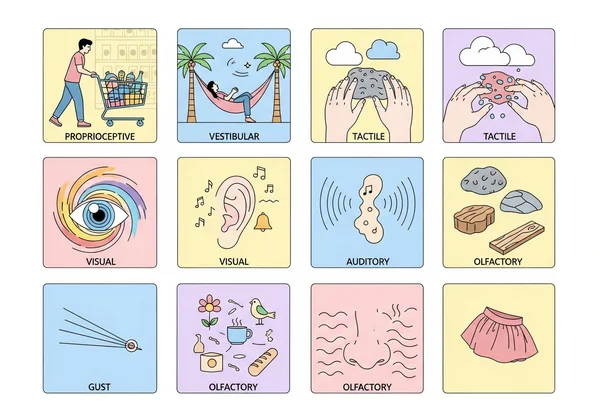
Proprioceptive and Vestibular Activities
Two powerful but often overlooked senses are the proprioceptive and vestibular systems.
- Proprioception is your sense of body awareness. It comes from receptors in your muscles and joints. Activities that involve heavy work, like pushing, pulling, or lifting, provide calming proprioceptive input. Examples include doing push-ups, carrying groceries, or using a weighted lap pad.
- The Vestibular System, located in your inner ear, governs your sense of balance and spatial orientation. Gentle, rhythmic movements like rocking in a chair, swinging, or lying in a hammock can be very organizing and soothing for this system.
Incorporating short bursts of these activities throughout your day can help you stay regulated and prevent sensory overload before it starts.
Technology-Assisted Sensory Management
Technology offers innovative ways to manage your sensory world. There are many apps and devices designed to support sensory regulation.
- Color-Changing Lights: Smart bulbs (like Philips Hue) allow you to customize the color and brightness of your lighting from your phone, adapting your environment to your mood and needs.
- Binaural Beats Apps: These apps play slightly different sound frequencies in each ear, which can help promote states of relaxation or focus.
- Wearable Devices: Some wearables track stress levels and provide gentle vibrations as a reminder to take a break or do a breathing exercise.
Experiment with these tools to see what works for you. Technology can be a powerful ally in creating a personalized sensory experience.
Your Sensory Journey Continues
Exploring your sensory responses is deeply personal work. By understanding your unique sensory landscape, you're taking meaningful steps toward creating an environment that honors your needs and helps you thrive. The strategies in this guide can turn daily challenges into manageable experiences, but remember that every person's sensory needs are unique. As you try these approaches, pay close attention to what works best for you or your child. Your sensory toolkit will grow and change as you learn more about yourself.
Learning about your sensory needs builds self-awareness and self-advocacy skills. With this understanding comes the ability to articulate your needs clearly and make intentional choices that support your well-being. By understanding your sensory system, you can stop fighting against your environment and start shaping it to support you.
If you haven't yet explored your autistic traits, our assessment can provide powerful insights into your sensory patterns and more. It offers a structured way to reflect on your experiences and gives you a comprehensive, personalized report. Take the next step on your journey. Visit our homepage to start your test and gain guidance tailored to your unique profile.
FAQ Section
Can sensory sensitivities change over time?
Yes, absolutely. Sensory sensitivities can fluctuate based on stress, fatigue, illness, or hormonal changes. You might be more sensitive to sound when you're tired, for example. They can also change over a lifetime. Keeping a simple journal can help you notice patterns and understand your changing needs.
How do I know if my child's sensory reactions are autism-related?
While many children have sensory preferences, the intensity, frequency, and impact on daily life are often different for autistic children. If sensory issues consistently interfere with school, socializing, or family routines, it may be a sign of an underlying neurodevelopmental difference. An initial screening, like the one offered on our site, can be a helpful, non-invasive first step. You can start an assessment with your child to explore these traits.
Are sensory strategies only for people with autism?
No, not at all. Many of these strategies are beneficial for everyone! Creating a calmer, more organized environment can reduce stress and improve focus for neurotypical people as well. These techniques are rooted in universal principles of neuroscience and occupational therapy, making them helpful for anyone looking to improve their well-being.
How can I help others understand my sensory needs?
Explaining sensory needs can be difficult. Using analogies can help. For example, you might say, "The sound of the vacuum cleaner feels like a fire alarm to my ears," or "Wearing that scratchy sweater feels like having sandpaper rubbed on my skin all day." Sharing clear, specific information from a tool like the RAADSR-inspired test can also provide objective language to support your conversation.