RAADSR Results Guide: Your Autism Advocacy Toolkit
You've completed our free autism test online and received your score — now what? This practical guide transforms your RAADSR test results into actionable steps for navigating healthcare, education, and personal understanding of autism traits. Whether you're exploring neurodiversity for yourself or a loved one, these evidence-backed strategies will help you advocate effectively while emphasizing that the RAADSR is a screening tool, not a medical diagnosis.
Using Your RAADSR Score for Clinical Referrals
Your RAADSR results serve as valuable documentation when seeking professional evaluation. A score above the widely recognized clinical threshold of 65 often indicates the presence of significant autistic traits, making it a strong starting point for a conversation with a healthcare professional.
Preparing for Your Diagnostic Evaluation
-
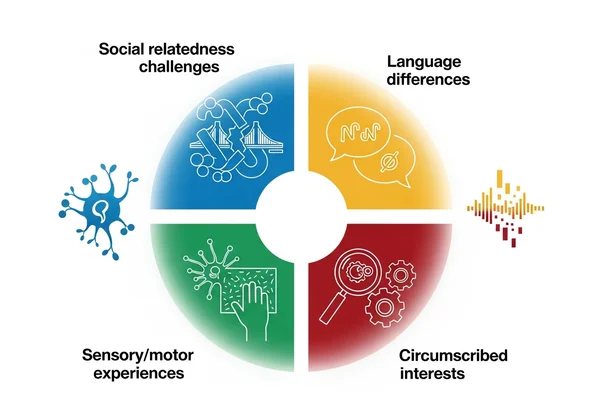
Create a symptom timeline: Map your lifelong experiences to the RAADSR's four key domains:
- Social relatedness challenges
- Language differences
- Sensory/motor experiences
- Circumscribed interests
Track specific real-world examples, such as difficulty maintaining eye contact in meetings or feeling overwhelmed in noisy grocery stores. Download our free symptom journal template to organize your observations systematically.
-
Quantify your daily impact: Note how frequently these traits affect:
- Work productivity
- Relationship maintenance
- Emotional regulation
Professionals need concrete evidence of functional impairment for an ASD diagnosis — your RAADSR score provides quantitative support for these qualitative experiences.
Communicating RAADSR Results to Healthcare Providers
When presenting your RAADSR test online results:
-
Contextualize your score: "My RAADSR score of 134 suggests significant autistic traits, particularly in sensory processing, which may explain why I experience burnout after social events."
-
Request specific follow-ups: "Given these screening results, could we explore a referral to a neurodevelopmental specialist for a formal diagnostic assessment?"
-
Bring visual documentation: Print both your numerical results and our interpretation guide showing clinical score ranges.
Key Advocacy Tip: Frame your RAADSR results as screening data prompting further investigation, not self-diagnosis. Professionals appreciate patients who understand the difference between screening tools and diagnostic assessments.
School Advocacy with RAADSR Results
Parents frequently ask: "Can RAADSR scores help secure school accommodations?" While not diagnostic, they provide crucial evidence for requesting evaluations:
IEP Meeting Strategies Using RAADSR Data
-
Correlate scores to educational impacts:
- High sensory scores → Request an occupational therapy assessment to address focus issues in a loud classroom.
- Elevated language scores → Push for a speech-language evaluation to support peer communication.
- Social differences → Advocate for social skills support or a lunch group.
-
Present results as objective evidence: "Our child's RAADSR sensory score of 96 aligns with their reported cafeteria meltdowns — we believe they need accommodations for noisy environments."
-
Combine with observational data: Supplement scores with teacher and parent narratives using our school advocacy worksheet.
Collaborating with Educators About Neurodiversity
When discussing RAADSR results with school staff:
- Focus on functional needs over labels: "Regardless of diagnosis, these scores show Ben needs noise-canceling headphones during assemblies."
- Request specific interventions: "Since Maria scored high in social differences, could she have a designated quiet space to decompress during recess?"
- Offer educational resources: Share our teacher's guide to neurodiversity explaining RAADSR components in classroom contexts.
Parent Pro Tip: Schools can't diagnose but must evaluate if traits affect learning. Your RAADSR documentation helps trigger legally mandated assessments under IDEA.
Family Discussions About Autism Traits
Talking to Your Partner About RAADSR Findings
Approach sensitive conversations using:
-
A shared language framework: "Remember that RAADSR test I took? My high score in sensory processing helps explain why I struggle with loud restaurants and prefer quiet evenings at home."
-
Solution-focused requests: "Since social interactions drain my energy, could we limit weekend gatherings to just one event to help me avoid burnout?"
-
Mutual understanding exercises: Complete our relationship communication quiz together using your RAADSR insights.
Supporting Siblings When a Child's RAADSR Shows Traits
Help neurotypical children understand:
- "Charlie's brain works differently, which is why routines are so important to him." (using age-appropriate RAADSR domain explanations)
- Fair ≠ Identical: "You get to have spontaneous playdates because your brain is comfortable with surprises, but Charlie needs quiet time after school to feel calm."
- Shared activities: Find common-ground interests using the child's RAADSR "circumscribed interests" results.
RAADSR Results as a Self-Discovery Tool
Building Community Through Shared RAADSR Experiences
Your score creates connection points:
-
Find your neurotribe: Seek out online groups for adults with similar RAADSR profiles to share experiences.
-
Compare coping strategies: "I see others with high sensory scores recommend weighted blankets for better sleep. I might try that."
-
Track growth: Retake the RAADSR test annually with our progress tracking feature to monitor changes in your self-awareness and coping skills.

Creating Personal Accommodation Plans
Transform scores into action:
- Workplace adjustments:
- High sensory score → Request fluorescent light covers or permission to wear headphones.
- Social differences → Propose that meeting agendas be sent in advance to allow for processing time.
- Home modifications:
- Design sensory-safe spaces with dimmable lighting and soft textures.
- Implement visual schedules to support executive functioning.
Your RAADSR Journey Continues
Your RAADSR score isn't an endpoint — it's the beginning of deeper understanding and empowerment. This result provides quantitative validation for your lived experiences, pinpoints specific areas for targeted support, and gives you a common language for effective advocacy.
Ready to gain even deeper, personalized insights? Explore our AI-powered analysis, which contextualizes your RAADSR score against your unique life circumstances to provide tailored strategies and recommendations. Take the next step in your neurodiversity journey today.
Using RAADSR Results Effectively
Can RAADSR results alone secure school accommodations?
No — but they provide crucial evidence to trigger required evaluations. Schools need comprehensive assessments, and high RAADSR scores demonstrate the need for them. Our school advocacy guide details this process.
How do I discuss my RAADSR score with my doctor?
Present the results as: "This screening suggests autistic traits are affecting my [specific areas]. What diagnostic steps should we consider?" Bring our printable **doctor discussion guide to your appointment to facilitate the conversation.
What's the difference between this screening and a diagnosis?
The RAADSR identifies the likelihood of autistic traits (screening), while a formal diagnosis requires a comprehensive, multi-faceted evaluation by qualified professionals. Think of the RAADSR as a "check engine light" that prompts a deeper look from a mechanic.
Should I share my RAADSR results with my employer?
This is a personal decision, but it can be helpful if you need accommodations. Focus on functional needs rather than labels: "My sensory profile suggests I would be more productive in a quieter workspace." Our workplace accommodation toolkit offers disclosure strategies.
What if my RAADSR score contradicts my self-perception?
You are the expert on your own experience. A score is just one piece of data. Consider that traits can be masked or may present differently under stress. Our AI analysis can help explore discrepancies, or you can retake the test during a different life phase.