RAADS-R vs. RAADS-14: Which Screener Should You Use?
Navigating autism self-assessment tools can feel confusing, especially when you’re comparing two similar names. If you’ve searched RAADS-R vs RAADS 14, you’re likely trying to understand what each screener is designed to do, how they differ, and which one fits your current needs. This guide offers a clear, side-by-side look at the 80-question RAADS-R and the shorter RAADS-14 screen, including what you can (and can’t) learn from each. For a structured place to begin self-reflection, you can explore our RAADS-R test online. This article is for education and self-understanding, not diagnosis.

At a Glance: Key Differences Between RAADS-R and RAADS-14
For those who want a quick answer, the primary distinction in the RAADS-R vs. RAADS-14 comparison comes down to depth versus speed. One is a thorough exploration, while the other is a quick snapshot.
Here is a simple breakdown to help you see the differences immediately.
| Feature | RAADS-R (Ritvo Autism Asperger Diagnostic Scale - Revised) | RAADS-14 Screen |
|---|---|---|
| Number of Questions | 80 | 14 |
| Estimated Time | 30–45 minutes | 5–10 minutes |
| Primary Purpose | Comprehensive self-assessment of autistic traits in adults. | Rapid screening to quickly identify possible traits. |
| Level of Detail | High. Scores across four distinct domains. | Lower. One score suggesting whether further exploration may help. |
| Best For | In-depth self-reflection and organizing detailed observations. | A quick initial check when you’re short on time or just starting. |
This table is a starting point. Next, let’s look at what each screener actually includes and when it tends to be most useful.
What Is the RAADS-R? A Deep Dive into the 80-Question Scale
The RAADS-R (Ritvo Autism Asperger Diagnostic Scale-Revised) is a detailed questionnaire designed to help adults identify autistic traits they may have experienced since childhood. Many people use it for personal insight and structured self-reflection.
Because of its comprehensive nature, it doesn’t just produce one overall number. It also separates your results into different areas of experience, which can help you notice patterns more clearly.
The Four Key Domains Measured
The RAADS-R test explores 80 statements across four key areas to create a more nuanced profile:
- Social Relatedness: experiences with fitting in, reading social cues, making and keeping friends, and feeling like you’re “performing” socially.
- Language: communication style, such as taking things literally, having one-sided conversations, or mentally scripting what you’ll say.
- Sensory/Motor: sensitivity to sound, light, or texture, plus coordination differences or repetitive movements (often called stimming).
- Circumscribed Interests: the tendency to develop intense, focused interests in specific topics.
Looking at these areas separately can support deeper self-reflection than a simple “yes” or “no” outcome.
Purpose and Intended Use
The RAADS-R was developed with adults in mind, including those who may not have been identified earlier in life. Its main role is to help you organize experiences into a structured framework.
Some people find it helpful to bring their notes and results to a conversation with a therapist or other qualified professional. Still, it’s important to remember that it’s a screening tool for reflection, not a diagnostic instrument.
What Is the RAADS-14? A Look at the 14-Question Rapid Screener
The RAADS-14 Screen is a condensed version of the broader RAADS-R approach. It’s designed for situations where a quick, initial screen is more practical than a longer questionnaire.
Origins and Development
Researchers created the RAADS-14 by analyzing the full RAADS-R and selecting a small set of items that best separated autistic adults from non-autistic adults in their sample. In other words, it aims to be efficient rather than comprehensive.
If you’re looking for a fast starting point, you can try our RAADS-14 test as a brief screen before deciding whether a longer assessment feels worthwhile.
Understanding Its Accuracy and Limitations
When people ask about RAADS-14 accuracy, it helps to keep the intended purpose in mind. A brief screen can be useful for flagging whether further exploration might be helpful.
At the same time, RAADS-14 validity is centered on screening, not detailed self-understanding. With only 14 questions, it can’t capture the same nuance as an 80-item tool, and it won’t tell you much about which areas of life are driving your score. It’s best viewed as a first signal, not a final answer.
How to Choose the Right Screener for Your Needs
So, in the RAADS-R vs. RAADS-14 decision, what should you choose? The best fit depends on your goals, your time, and how deep you want to go right now.
What Are Your Personal Goals for Taking a Screener?
Start by asking what you want from the experience:
- Are you just starting to feel curious? If autism is a new possibility for you and you want a quick, low-commitment signal, the RAADS-14 can be a comfortable starting point.
- Are you seeking deeper self-understanding? If you’ve been thinking about this for a while and want more context, the RAADS-R is usually the better match.
Which Test Offers a More Detailed and Nuanced Profile?
In most cases, the 80-question RAADS-R test offers a more detailed picture because it looks across four domains. That makes it easier to spot patterns.
For example, you might notice stronger traits in Sensory/Motor and Circumscribed Interests while reporting fewer traits in Social Relatedness. A single total score (like the RAADS-14 provides) can’t show that kind of shape.
When Is the Shorter RAADS-14 a Better Fit?
The RAADS-14 often fits best when:
- You’re short on time and want a quick screen.
- You feel overwhelmed by a longer questionnaire and want a lighter first step.
- You’re doing an initial screen before deciding whether to explore further.
Beyond the Score: How to Use a Screener for Reflection
Once you understand the difference between RAADS-R and RAADS-14, the next step is deciding how to use the results. A screener score is most helpful when it becomes a prompt for observation, not a verdict.
Why a Comprehensive Screener Can Be a Helpful First Step
A longer tool like the RAADS-R can help you put words to lifelong experiences. It offers a structured way to look back on patterns across time, especially if you’ve felt “different” but couldn’t explain why.
This isn’t about proving anything. It’s about building a clearer vocabulary for how you think, feel, communicate, and respond to sensory or social demands.
Optional Personalized Interpretation Without Diagnostic Labels
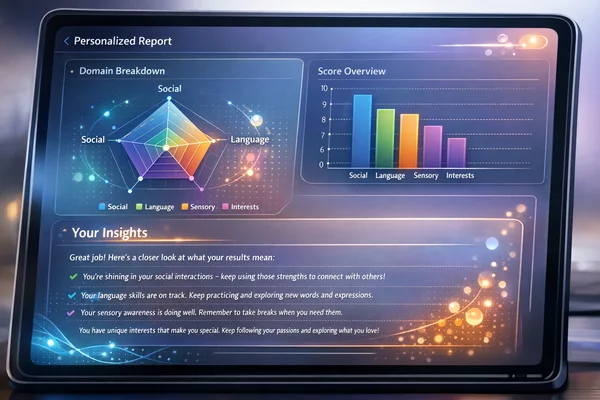
Some platforms offer optional, personalized explanations that translate scores into practical reflections. When done carefully, this can help you connect results to real situations, such as communication preferences, sensory needs, or stress patterns.
Even with personalization, it’s still not a diagnosis. It’s simply one way to support self-understanding and help you decide what you want to explore next.
Making an Informed Choice for Your Self-Reflection Journey
Choosing between the RAADS-R and RAADS-14 is personal. There’s no single “right” answer—only what best supports you right now.
If you want a quick signal, the RAADS-14 is efficient. If you want a more detailed map for reflection, the RAADS-R usually offers more context. Many people start with the short screen and then move to a longer tool if the results raise meaningful questions.
Actionable Next Steps After Your Assessment:
Regardless of which screener you use, treat the result as information you can work with:
- Journal about your reactions. What feelings come up, and what memories does it bring to mind?
- Talk with someone you trust. A supportive friend, partner, or family member may help you process what you’re noticing.
- Explore community perspectives. Many autistic adults share practical lived-experience insights that can help you feel less alone.
- Consider professional guidance. If your results raise significant questions or distress, a clinician with experience in adult autism can help you sort through them.
It’s worth repeating: screeners are designed for screening and self-reflection. They can’t confirm whether you are autistic, and they can’t replace a comprehensive clinical evaluation by a qualified professional.
Frequently Asked Questions
Are the RAADS-R and RAADS-14 formal diagnostic tools?
No. Both are screening tools that can help you identify traits that may be associated with autism, but they cannot provide a medical diagnosis. A formal diagnosis requires a comprehensive evaluation by a qualified professional, typically involving interviews, developmental history, and additional assessment methods.
Do clinicians use the RAADS-R in their practice?
Some clinicians may use the RAADS-R as one piece of a broader assessment process, especially as a way to gather self-reported experiences. However, it is not used as a standalone diagnostic instrument. It works best when combined with clinical interviews, observation, and other tools.
What does a high score on the RAADS-R suggest?
A higher score suggests you reported more traits that are commonly associated with autism in adults. For many people, that can be a reason to explore further—through learning, reflection, community discussion, or professional consultation. It does not confirm that you are autistic, and it should not be treated as a diagnosis.
Can I use these tools for my child?
The RAADS-R was designed and validated for adults (often cited as ages 16+). It is not intended for young children, since many questions assume adult life experiences. If you’re concerned about a child’s development, it’s best to speak with a pediatrician or a child psychologist who specializes in developmental assessments.