What Your RAADS-R Score Means: A Clear Guide
So, you've taken the RAADS-R test or are thinking about it, and now you're looking at a number. What does my RAADS-R score really mean beyond that figure? Understanding your results is a key step in self-discovery. The Ritvo Autism Asperger Diagnostic Scale-Revised (RAADS-R) is a valuable self-assessment tool available on raads-r.net, designed to help adults explore traits potentially associated with the Autism Spectrum Disorder (ASD). This guide will help you navigate your score, understand its context, and figure out what comes next.
Understanding Your RAADS-R Results: What the Score Represents
The RAADS-R score provides an indication of the extent to which an adult endorses experiences commonly associated with autism. It's derived from your answers to 80 questions covering social relatedness, language, sensory-motor issues, and circumscribed interests.
How RAADS-R Scores Are Calculated Briefly
Each answer on the RAADS-R test corresponds to a point value (typically 0 for "Never true" up to 3 for "True now and when young," though some items are reverse-scored). These points are summed up to produce your total RAADS-R score. This score offers a quantitative measure based on your self-reported experiences, forming the basis for score calculation.
What High vs. Low Scores Generally Indicate
Generally speaking, a higher RAADS-R score suggests a greater number or intensity of reported traits associated with ASD profiles. Conversely, a lower score indicates fewer such traits reported. But what do different levels suggest? It's crucial to remember this is a screening tool, and the score indication points towards potential areas for self-reflection or further professional exploration, not a definitive label.
Breaking Down RAADS-R Score Ranges and Thresholds
Understanding where your score falls in relation to established research thresholds can provide helpful context. How to interpret RAADS-R results often involves looking at these ranges.
The Official RAADS-R Threshold for Autism Traits
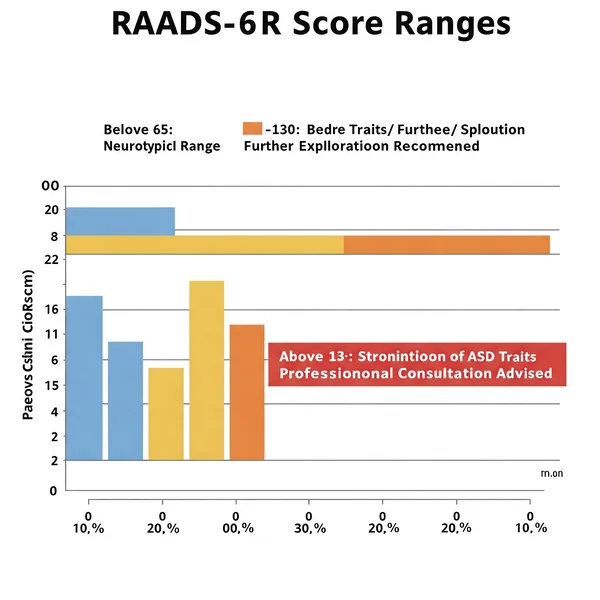
Research studies often cite a RAADS-R threshold of 65 or higher as indicative of potential autism spectrum traits. Scores significantly above this threshold may suggest a stronger alignment with ASD traits. However, it is critical to understand that this threshold comes from group studies and is not a diagnostic cut-off for an individual. Many factors influence a score, making professional interpretation essential for diagnosis. Answering "what score on the raads test is considered autistic?" isn't as simple as just hitting a number; context matters immensely.
Interpreting Scores Below the Threshold
Scores below 65 are generally considered within the neurotypical score range. This suggests the individual reports fewer experiences commonly associated with ASD according to the RAADS-R measure.
The Meaning of Borderline RAADS-R Scores
Scores falling near the threshold (e.g., in the 60s or slightly above 65) might be considered borderline. This range can indicate the presence of some borderline traits but may require more careful consideration and potentially further assessment to understand fully.
Significance of Scores Above the Threshold
Scores significantly above the threshold (often cited as 130+ or even higher in some contexts) strongly suggest the presence of numerous traits aligned with ASD. While still not a diagnosis, such scores strongly warrant further exploration and consideration of a professional evaluation.
Factors Influencing Your RAADS-R Score Interpretation
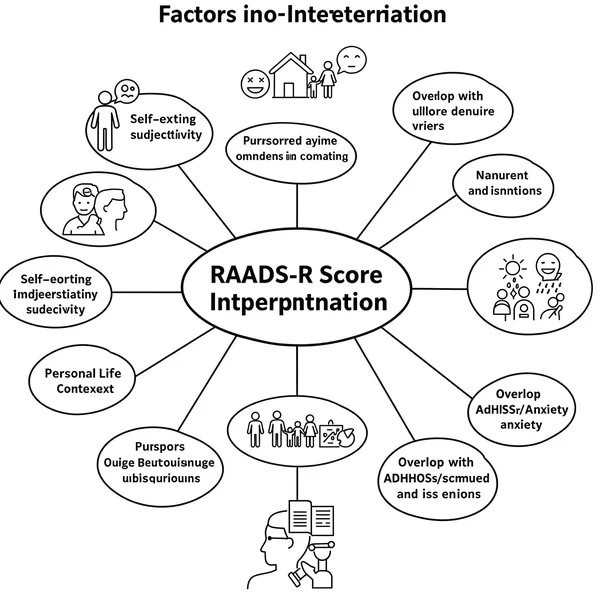
Your RAADS-R score interpretation isn't just about the final number. Several factors can influence the results and how they should be understood. Thinking about "is the raads-r test accurate?" involves acknowledging these nuances.
Self-Reporting Considerations in Autism Self-Assessment
As a self-report measure, the RAADS-R relies on your perception and memory of your experiences. Your current mood, understanding of the questions, and level of self-awareness can all impact your answers. This inherent subjectivity is a key part of any self-assessment.
Potential Overlap with Other Conditions
Do people with ADHD score high on RAADS? Yes, it's possible. There's a known ADHD overlap in symptoms like executive function challenges or social difficulties. Co-occurring conditions (like anxiety or depression) can also influence how questions are answered, potentially inflating the score. Distinguishing between conditions requires clinical expertise.
The Importance of Personal Context
Your life experiences, cultural background, and personal circumstances provide vital personal context for interpreting any score. What might be a challenge in one environment could be neutral in another. The score alone doesn't capture this richness.
Why Your RAADS-R Score Isn't a Diagnosis
This point cannot be stressed enough: the RAADS-R test, while helpful, does not provide a medical diagnosis of Autism Spectrum Disorder.
The Role of RAADS-R as an Autism Screening Tool
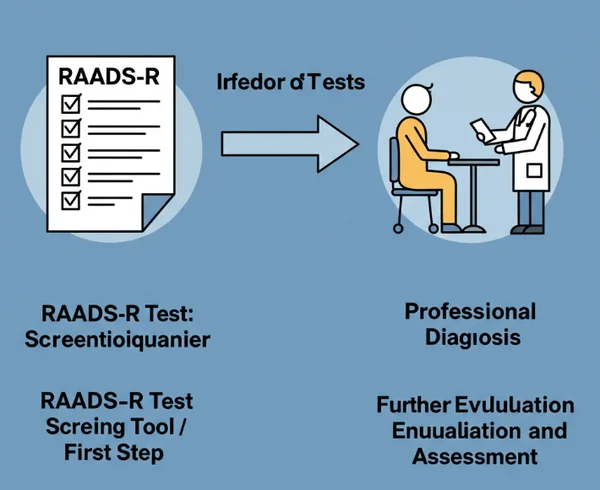
The RAADS-R is designed as an autism screening tool. It helps identify individuals who might benefit from a formal diagnostic assessment. Think of it as a first step or a conversation starter, not the final word. It's a useful part of the information-gathering process.
Why Professional Evaluation is Crucial for Diagnosis
A formal ASD diagnosis is a complex process conducted by trained clinicians (like psychologists or psychiatrists). It involves clinical interviews, developmental history review, observation (sometimes using tools like ADOS), and consideration of differential diagnoses. This professional evaluation is necessary to confirm ASD and rule out other conditions, making it the gold standard diagnostic tool.
Next Steps After Getting Your RAADS-R Test Score
Okay, you have your RAADS-R test score. What should I do with my RAADS-R score? Here are some constructive next steps:
Engaging in Self-Reflection and Observation
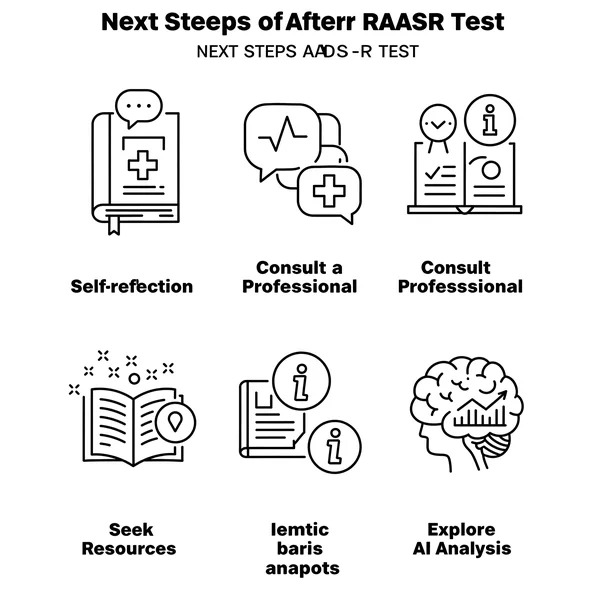
Use the score and perhaps the specific areas highlighted (if using subscores or our AI analysis) as prompts for self-reflection. Do the indicated traits resonate with your lived experiences? Observe your patterns in social situations, sensory environments, and communication.
When to Consider Consulting a Healthcare Professional
If your score is significantly elevated (especially well above 65), if the traits described cause you significant distress or impairment in daily life, or if you simply desire diagnostic clarity, it's wise to consult a professional. Bring your results as part of the information you share.
Using Your Results to Seek Support or Understanding
Whether or not you pursue a formal diagnosis, understanding potential traits can help you seek support. This might involve finding online communities, reading books by autistic authors, exploring workplace accommodations, or communicating your needs more effectively to loved ones. For a deeper, personalized look beyond the number, consider exploring our new AI Personalized Analysis feature after your test.
Using Your RAADS-R Score for Informed Self-Awareness
Your RAADS-R score is a piece of information on your journey of self-awareness. It's a potentially valuable tool for reflection and for deciding whether to seek further professional input. It is not a label or a definitive answer. Treat it with curiosity and use it constructively to better understand yourself and your needs.
What are your thoughts on interpreting these scores? Have you found self-assessment tools helpful? Share your experiences or questions in the comments below! Ready to begin your exploration? Take the free RAADS-R test.
Frequently Asked Questions About RAADS-R Scores
-
What is considered a 'normal' or neurotypical RAADS-R score?
Research generally suggests scores below 65 fall within the typical range for individuals who do not identify as autistic. However, "normal" is complex, and scores vary widely.
-
What specific score on the RAADS-R test indicates potential autism?
While a score of 65 is often cited as a research threshold suggesting potential ASD traits, no single score definitively indicates autism. It signifies that traits reported are consistent with those often seen in autistic individuals and may warrant further investigation. A formal diagnosis requires a professional evaluation.
-
How accurate is the RAADS-R test score?
The RAADS-R is considered a reliable screening tool with good sensitivity in research settings for identifying adults who might be on the autism spectrum. However, its accuracy for diagnosis in an individual depends on many factors (see "Factors Influencing Interpretation" above). It is not a substitute for a clinical diagnosis.
-
Can having ADHD affect my RAADS-R score meaning?
Yes, due to symptom overlap (e.g., social difficulties, executive function issues), individuals with ADHD might score higher on the RAADS-R. This highlights the importance of interpreting results carefully and considering a professional assessment to differentiate conditions.
-
I have my RAADS-R score, what should I do now?
Reflect on the results and how they align with your experiences. Consider the score ranges and influencing factors discussed. If your score is high or you have ongoing concerns, the best next step is to discuss them with a doctor, psychologist, or other qualified professional who can conduct a comprehensive evaluation. You might also find our optional AI Personalized Analysis helpful for deeper insights after taking the test. Ready to explore further? Take the free RAADS-R test here.