Adult Autism Diagnosis Online and What to Expect for Seekers
If you have spent years feeling slightly out of step with the world, discovering the concept of neurodiversity can feel like finally turning on a light in a dark room. For many, this realization sparks an immediate, intense need for clarity. Naturally, the first place you might look is the internet, wondering how to pursue a comprehensive evaluation.
The digital landscape is packed with quick quizzes and remote telehealth clinics, making it difficult to know what is legitimate. Therefore, this comprehensive guide will help you understand the core differences between a medical evaluation and an educational self-screener. By learning how these tools function, you can confidently try the RAADS-R test online to begin mapping out a safe, structured journey toward self-discovery.

Online Diagnosis vs. Online Screeners: Understanding the Core Differences
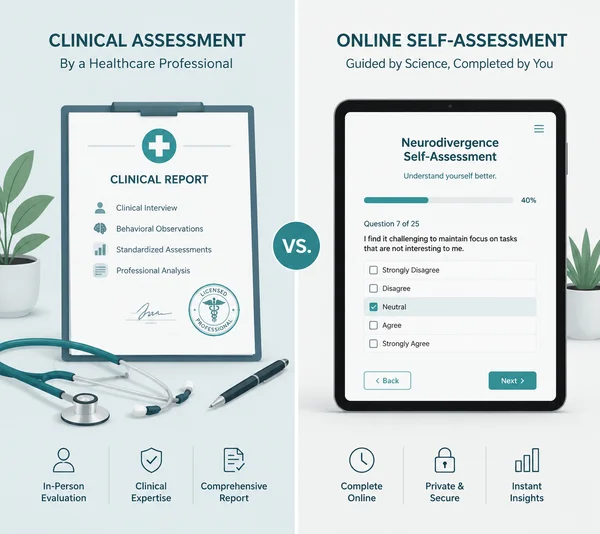
When you begin searching for an online adult autism diagnosis, the terminology can easily overlap and cause confusion. As a result, you must recognize the strict boundary between a formal medical evaluation and a personal reflection tool.
What Quantifies an Official Clinical Diagnosis?
An official clinical diagnosis is a legally binding medical determination. It can only be provided by a licensed professional, such as a clinical psychologist, psychiatrist, or neurologist. This formal process is essential if you are seeking specific outcomes.
For example, a formal diagnosis provides:
- Legal access to workplace accommodations under disability laws.
- Medical pathways for specific therapeutic supports and targeted insurance coverage.
- Documentation required by educational institutions for academic adjustments.
Furthermore, true clinical evaluations rely on standardized interviews, interactive behavioral observations, and strict diagnostic criteria outlined in manuals like the DSM-5. They are never based solely on automated multiple-choice questions.
What Web-Based Screening Tools Actually Do
In contrast, web-based screeners serve a completely different, yet highly valuable, purpose. They cannot provide an online autism diagnosis for adults. Instead, they act as highly structured mirrors for your personal experiences.
When you look for an online autism diagnosis adults guide, you usually find screening instruments first. These tools help you engage in deep self-reflection. They allow you to identify behavioral patterns and translate vague feelings into concrete, psychological terms. Consequently, a screening tool is an educational starting point. It flags potential traits and helps you decide if pursuing a formal evaluation is the right next step for you.
How a True Virtual Autism Evaluation Operates Legally and Clinically
You might wonder if a legitimate online autism diagnosis adults process is even possible. Yes, it is. However, it happens through regulated telehealth clinics, not through automated websites, fast social media checklists, or instant quizzes.
The Telehealth Evaluation Process with a Licensed Professional
Since the rise of remote healthcare, many clinical practices now offer virtual assessments. This process mimics an in-person clinic visit but takes place over secure video calls.
First, you will meet with a licensed clinician who specializes in adult neurodiversity. Next, you will participate in several hours of live interviews across multiple sessions. The practitioner will carefully observe your communication style, your response to specific questions, and your cognitive thought processes. Because this involves real-time clinical judgment by a live expert, it remains a robust, legally valid medical procedure.
Developmental History and Behavioral Observations Remotely
During a virtual evaluation, the clinician does not just look at who you are today. They must also establish that your traits have been present since childhood, as autism is a developmental condition.
Therefore, a valid autism diagnosis online adults process usually includes:
- Extensive, semi-structured interviews about your early developmental milestones.
- Questionnaires sent to parents, older siblings, or long-term partners to gather collateral history.
- Cross-referencing your lifelong experiences with clinical diagnostic manuals under professional observation.
In short, a true virtual diagnosis is an intensive, interactive, and human-led process. It requires time, financial investment, and the direct involvement of a healthcare provider.
Recognizing Adult Autistic Traits and the Complexity of Social Masking
Many individuals looking for an autism diagnosis for adults online feel a heavy sense of imposter syndrome. You might ask yourself why no one noticed your traits when you were a child. The answer usually lies in how adult autism presents, combined with the exhausting practice of social camouflaging.
Beyond the Basics: How Autism Manifests in Adult Life
Adult autistic traits often look very different from the stereotypes shown in media. Instead of obvious developmental delays, adults usually face internal, invisible challenges.
Common experiences include:
- Sensory Processing Differences: You might find bright office lights, background chatter, or certain clothing textures physically painful or deeply distracting.
- Social Battery Depletion: While you can successfully navigate a social event, doing so might require days of solitary recovery afterward.
- Deep, Focused Interests: You might find immense joy and regulation in highly specific topics or hobbies, researching them with intense dedication.
- Need for Predictability: Sudden changes to your schedule or unwritten social rules might cause intense internal distress.
Understanding autism symptoms in this context helps validate the daily friction you experience in a world designed for neurotypical standards.
The Exhausting Reality of Camouflaging and Social Masking
If you grew up without support, you likely learned to adapt. This adaptation is called masking. Social masking involves consciously studying and mimicking neurotypical behaviors to blend in and protect yourself from rejection.
For example, you might manually remind yourself to make eye contact during meetings. You might script your conversations before making a phone call. You might suppress your natural urge to fidget or rock (stimming) to avoid drawing attention.
While masking protects you socially, it is psychologically draining. Over the years, this constant performance can lead to severe autistic burnout, chronic fatigue, and depression. Because you became so good at hiding your struggles, teachers and doctors likely missed the signs during your childhood.

Unlocking Clarity Frame by Frame: The Scientific Role of the RAADS-R Test
When you are tired of masking and want to understand your brain, formal testing can feel intimidating. This is where scientific, self-administered tools become incredibly useful. They provide a safe, private space to evaluate your lifelong patterns.
What is the Ritvo Autism Asperger Diagnostic Scale-Revised?
The RAADS-R is a highly respected screening instrument designed specifically for adults who escaped diagnosis during childhood. Unlike older tests focused entirely on children, it accounts for the subtle ways adults experience the world and covers internalized presentations.
The test asks you to evaluate whether specific traits have been true for you currently, true in the past, or never true. Therefore, it captures the reality that you might have learned to hide or modify certain behaviors as you grew older.
Looking at the Four Subscales of Self-Reflection
To give you a clear picture, the RAADS-R breaks down your experiences into four critical domains:
- Social Relatedness: How you process social cues, empathy, and relationships.
- Circumscribed Interests: The intensity, focus, and regulatory nature of your hobbies or routines.
- Language: How you understand literal versus figurative speech, sarcasm, and small talk.
- Sensory/Motor: Your physical reactions to sensory input and your coordination.
By exploring these categories, you can safely check your traits with this RAADS-R test in a private setting. It transforms overwhelming confusion into organized, structured data.
Note: Online screening tools are designed exclusively for educational insight and personal reflection. They do not replace a medical evaluation. High scores suggest a strong alignment with autistic traits, meaning a conversation with a professional is highly recommended.
Organizing Your Insights: How to Use Your Screening Results Safely
Taking an online screener is only the first step. Once you see your results, you might feel a rush of validation, followed immediately by anxiety about what to do next. To manage this safely, follow these structured post-screening next steps.
Step 1: Document Your Personal Traits Portfolio Do not just look at your total score. Instead, print or save your detailed breakdown. Highlight the specific questions that resonated with you the most. By doing this, you create a physical record of your experiences.
Step 2: Add Context from Your Daily Life Next to your high-scoring areas, write down real-life examples. If you scored high in sensory sensitivity, note that grocery store lights give you migraines. If you struggle with social relatedness, mention your exhaustion after team meetings.
Step 3: Seek Professional Guidance If your traits are causing significant distress or interfering with your life, take your portfolio to a licensed therapist or psychologist. Handing them your structured notes is much easier than trying to explain a lifetime of vague feelings from memory.
Meanwhile, if the self-reflection process causes emotional fatigue, remember to pace yourself. Step away from the screen, engage in a grounding activity, and return to your exploration when you feel regulated.
Embracing Self-Understanding on Your Own Terms
Navigating the possibility of neurodiversity as an adult is a profound journey. Whether you eventually seek a clinical diagnosis or simply use self-assessments to adjust your daily life, the goal remains the same: self-compassion.
You do not need an immediate medical label to start respecting your sensory boundaries or to forgive yourself for social exhaustion. Educational tools are here to support your self-discovery, allowing you to learn at a comfortable pace. If you are ready to take the next step in making sense of your unique mind, reviewing a comprehensive RAADS-R test online platform can provide the structured insights you need to move forward with confidence.
Frequently Asked Questions
Can an online autism test give me a legally binding diagnosis for workplace accommodations?
No, an automated online screener cannot provide a legally binding medical diagnosis. While these tools are excellent for personal insight and identifying traits, human resources departments and educational institutions require formal documentation. This documentation must come from a licensed medical or psychological professional who has conducted a comprehensive clinical evaluation.
Why was my autism missed during childhood?
Many adults, particularly women and individuals with high intelligence, go undiagnosed in childhood because of social masking. You likely learned to observe and mimic neurotypical behavior to fit in, effectively hiding your internal struggles. Additionally, older diagnostic criteria were heavily承接 toward young boys with very visible developmental or speech delays, meaning internalized presentations were frequently overlooked by doctors and teachers.
Is the RAADS-R test free to access for self-assessment?
Yes, the RAADS-R questionnaire is widely available online as a free, accessible resource for adults. It allows you to privately assess your traits across social, language, and sensory domains. However, always remember that taking the test online is an educational exercise for self-reflection and personal advocacy, not a substitute for clinical psychiatric care.