RAADS-R Test: Your Guide to Autism Self-Assessment
Introduction: Understanding the RAADS-R Test
The RAADS-R test (Ritvo Autism Asperger Diagnostic Scale-Revised) offers individuals a convenient way to explore their potential autism spectrum traits, providing actionable insights into behaviors and experiences. Designed as a self-assessment, the test provides insights into key areas of behavior, including social interaction, language use, sensory responses, and circumscribed interests. At RAADS-R.net, we offer a streamlined, online version of this test, empowering users to explore their unique profiles conveniently and privately.
Click here to start the RAADS-R test now and gain personalized insights into your neurodiversity.
What is the RAADS-R Test?
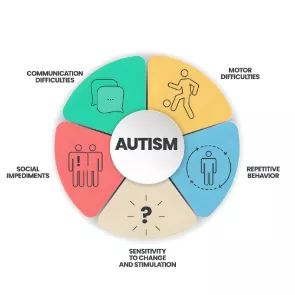
The RAADS-R test is a scientifically validated tool designed to help adults identify traits consistent with Autism Spectrum Disorder (ASD). Unlike formal diagnostic assessments administered by professionals, the RAADS-R test serves as a self-guided screening tool. It evaluates four primary areas:
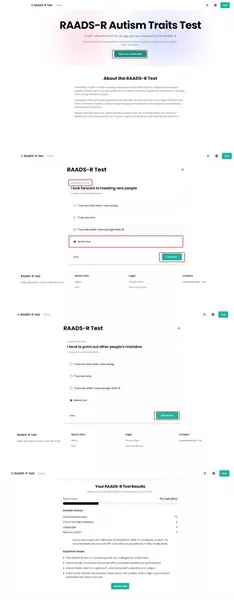
- Social Interaction: Difficulties with understanding and maintaining social relationships.
- Language Use: Challenges with expressive and receptive communication.
- Sensory-Motor Responses: Heightened or reduced sensitivity to sensory stimuli.
- Circumscribed Interests: Intense focus on specific topics or hobbies.
While the RAADS-R test cannot replace a professional diagnosis, it offers a foundational understanding of potential ASD traits.
Purpose and Scope of the RAADS-R
The RAADS-R test bridges the gap between self-awareness and professional evaluation. Its primary goals include:
- Raising Awareness: Helping individuals understand their behaviors and challenges.
- Guiding Next Steps: Encouraging those with significant traits to seek professional evaluation.
- Empowering Self-Reflection: Offering insights into how personal traits align with ASD indicators.
At RAADS-R.net, we emphasize accessibility and ease of use, ensuring that anyone can start their journey toward greater self-understanding.
Understanding RAADS-R Test Scores
The RAADS-R test generates a numerical score reflecting the intensity of autism-related traits. Scores are calculated based on user responses to 80 questions, each designed to evaluate specific behaviors and tendencies.
What Does a RAADS-R Score Mean?
Scores typically fall into three categories:
- Below the Threshold: Traits consistent with neurotypical development.
- Borderline Scores: Indicators of potential ASD traits; further evaluation may be warranted.
- Above the Threshold: Strong correlation with ASD traits, suggesting the need for professional consultation.
Example: A score of 160 or higher strongly aligns with autism spectrum traits. While this isn't a formal diagnosis, it indicates a need for further evaluation by a specialist.
Interpreting Your RAADS-R Results
Understanding your RAADS-R results is crucial to taking meaningful next steps.
- Typical Score Ranges:
- Neurotypical: Below 65.
- Borderline: 65–130.
- Autism Spectrum Traits: Above 130.
- Implications: Higher scores indicate a closer alignment with behaviors commonly associated with ASD.
Suggested Sentence:
If your results suggest high ASD traits, click here to consult our test and gain a clearer understanding of your profile.
Accuracy and Reliability of the RAADS-R Test
The RAADS-R test is a widely respected tool in the autism community, with years of research supporting its validity.
How Accurate is the RAADS-R Test?
The RAADS-R test demonstrates high reliability, with:
- Sensitivity: 97% (ability to identify ASD traits accurately).
- Specificity: 100% (ability to differentiate between ASD and non-ASD individuals).
While the RAADS-R is not a diagnostic tool, its reliability makes it an excellent starting point for self-assessment. Learn more about autism spectrum assessments from the National Institute of Mental Health (NIMH).These metrics underscore the RAADS-R test's reliability as a pre-screening tool. However, results are most valuable when shared with a qualified professional during a comprehensive diagnostic process.
Trustworthiness and Limitations
Although the RAADS-R is highly accurate, it has limitations:
- Not a Diagnosis: Results should be used as a guide to seek further evaluation, not as definitive proof of autism.
- Self-Reporting Bias: Accurate results depend on honest and reflective answers.
- No Professional Interaction: A full diagnosis involves clinical interviews and standardized tests.
At RAADS-R.net, we ensure users understand these limitations, empowering them to use their results responsibly.
Target Audience for the RAADS-R Test
The RAADS-R test is specifically designed for individuals seeking to assess their potential autism spectrum traits. It caters to a broad audience, including:
- Self-Reflective Adults: Individuals aged 18 and older who suspect they may have autism but have never been formally diagnosed.
- Supportive Family Members: Loved ones encouraging someone to better understand their neurodiversity.
- Healthcare Professionals: Clinicians using the RAADS-R test as a supplementary tool to inform a broader diagnostic process.
At RAADS-R.net, we’ve made the test accessible for anyone looking to gain insights into their unique profile conveniently and privately.
Who Should Take the RAADS-R Test?
The RAADS-R test is ideal for adults who:
- Are Undiagnosed: Individuals who suspect they may have autism but have yet to seek formal evaluation.
- Meet Cognitive Criteria: The test is calibrated for those with an IQ of 80 or above.
- Seek Insight: Anyone facing challenges in communication, social relationships, or sensory sensitivities.
Note: The RAADS-R test is not designed for individuals under 18 or those requiring immediate clinical intervention.
Take the RAADS-R test today and gain valuable insights about your traits.
Age Group Considerations
The RAADS-R is optimized for adults aged 18 and above. Key considerations include:
- Young Adults (18-30): Early recognition of traits can help individuals navigate education, relationships, and career choices.
- Middle-Aged Adults (30-50): Understanding neurodiversity can improve self-awareness and foster acceptance.
- Older Adults (50+): Identifying autism traits later in life can provide context for past experiences and help in making informed decisions about support and accommodations.
Regardless of your age, RAADS-R.net offers an intuitive platform to take this validated test online.
Comparison with Other Autism Assessments
The RAADS-R test is distinct from other autism evaluations, such as:
- Autism Spectrum Quotient (AQ): While the AQ measures autistic traits, it lacks the RAADS-R’s detailed subscale structure and clinical precision.
- Adult Asperger’s Assessment (AAA): AAA requires professional administration, while the RAADS-R is a self-report tool, offering ease of access and immediate results.
- Diagnostic Observation Schedule (ADOS): The RAADS-R complements ADOS by offering a self-guided pre-screening step, saving time and resources.
AAA is a diagnostic tool administered by clinicians, making it less accessible for individuals seeking immediate insights. The RAADS-R, in contrast, empowers users to take the first step from the comfort of their homes.
RAADS-R vs. Other Autism Tests
Key differences include:
- Accessibility: The RAADS-R is self-administered, making it ideal for initial screenings.
- Detailed Subscales: The test evaluates social relatedness, language, sensory-motor behaviors, and circumscribed interests.
- Immediate Results: Receive insights without waiting for clinical appointments.
Explore the RAADS-R test to discover its unique benefits and how it compares to other assessments.
How to Take the RAADS-R Test
Taking the RAADS-R test online is straightforward and accessible to anyone:
- Visit the Website: Go to RAADS-R.net.
- Start the Test: Click "Begin Test" to access the self-report questionnaire.
- Answer Honestly: Respond to 80 questions across four subscales, reflecting your experiences and traits.
- Submit Your Responses: Complete the test at your own pace and submit when ready.
- Review Your Results: Receive your detailed score instantly, highlighting areas where traits may align with autism spectrum profiles.
Your score report will outline key subscale results, helping you identify specific traits that may align with autism spectrum challenges.
Steps to Complete the RAADS-R Test Online
Here’s how to complete the test efficiently:
- Preparation: Ensure a distraction-free environment to focus on your answers.
- Navigate Subscales: Respond to questions across the four domains: social interaction, language, sensory-motor, and circumscribed interests.
- Be Honest: Reflect on your true experiences for accurate results.
- Review Results: Use your score to decide if further professional evaluation is needed.
Click here to begin your RAADS-R test and gain clarity about your neurodiversity.
What to Expect During the Test
The RAADS-R test is designed to be user-friendly:
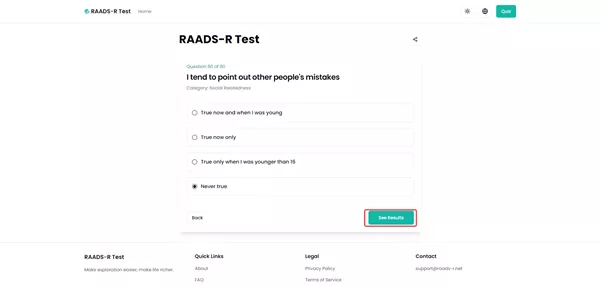
- Length: The test contains 80 questions and takes approximately 20-30 minutes to complete.
- Format: Questions are straightforward, requiring you to select from four response options.
- Outcome: Results are presented immediately upon completion, highlighting your overall score and its implications.
Next Steps After Taking the RAADS-R Test
Completing the RAADS-R test is the first step in better understanding your neurodiversity. Here’s what you can do next:

Review Your Results
- Understand Your Score: A score of 65 or higher suggests traits consistent with Autism Spectrum Disorder (ASD). Lower scores typically indicate a lack of autistic traits, though further professional evaluation can clarify.
- Identify Patterns: Look at the subscale results to identify specific areas of challenge, such as social interaction, sensory-motor responses, or language.
Consider Professional Evaluation
The RAADS-R test is a screening tool and not a diagnostic instrument. If your score suggests autistic traits, schedule a consultation with a clinical psychologist, psychiatrist, or autism specialist for a comprehensive evaluation.
Learn more about the RAADS-R test process here.
Interpreting Results: When to Seek Professional Help
The RAADS-R test provides valuable insights but cannot replace a formal diagnosis. For professional guidance, review the CDC's recommendations on autism diagnosis and treatment.Here’s when to seek professional assistance:
- High Scores (65 or Above): Indicates significant autistic traits that warrant professional evaluation.
- Ongoing Challenges: Struggles in social interaction, sensory sensitivity, or communication may benefit from targeted support.
- Desire for Clarity: A formal diagnosis can provide access to accommodations, therapy, or community resources.
Key Questions for Professionals
When consulting a specialist, consider asking:
- What does my RAADS-R score suggest about my autism spectrum traits?
- What additional tests or evaluations would you recommend?
- How can I access support services for autism?
How the RAADS-R Can Inform Next Steps
The RAADS-R test acts as a starting point for understanding your neurodiversity:
- Self-Awareness: Gain insights into areas where autistic traits may impact your life.
- Resource Identification: Use your results to explore therapies, support groups, or workplace accommodations.
- Professional Guidance: Share your score with clinicians to facilitate discussions about further evaluations or interventions.
Take the next step on your autism assessment journey.
Conclusion: Empowering Self-Understanding
The RAADS-R test is an empowering tool for self-awareness, offering insights into autism spectrum traits. While not diagnostic, it serves as a valuable first step toward understanding yourself and accessing professional support if needed.
Taking Control of Your Autism Assessment Journey
By taking the RAADS-R test, you:
- Recognize Strengths: Understand how your unique traits shape your experiences.
- Identify Challenges: Acknowledge areas where support or accommodations can enhance your quality of life.
- Take the First Step: Start a journey of self-discovery that can lead to greater acceptance and growth.
Discover your neurodiversity today.
The Importance of Professional Diagnosis
A formal autism diagnosis provides:
- Clarity and Validation: Confirming your traits can foster self-acceptance.
- Access to Resources: Gain eligibility for therapies, accommodations, and community support.
- Personalized Interventions: Receive tailored strategies to navigate challenges and achieve your goals.
Sharing your RAADS-R results with a qualified professional can streamline the diagnostic process, offering a clearer path toward meaningful support.
Frequently Asked Questions (FAQ)
Is the RAADS-R Test Used by Doctors?
Yes, the RAADS-R is a reliable screening tool often used by clinicians as part of a broader diagnostic evaluation. However, it is not a standalone diagnostic tool.
What is a 160 RAADS Score?
A score of 160 or higher strongly suggests the presence of significant autism spectrum traits. To confirm these findings, consult a healthcare professional for a detailed diagnosis and tailored recommendations.
Can the RAADS-R Test Diagnose Autism?
No, the RAADS-R is a screening tool that highlights potential traits consistent with autism. Only a qualified professional can provide a formal diagnosis.
What is the Difference Between RAADS-R and Other Tests?
The RAADS-R focuses on self-reported experiences in adults, emphasizing social, sensory, and language traits. Other tools, like ADOS, require clinical observation and are often used for children.
Additional Resources
Online Autism Test for Adults
Explore a range of online tools, like the RAADS-R test, designed to provide initial insights into autism spectrum traits.
Free Autism Screening Tools
At RAADS-R.net, we offer a free, user-friendly RAADS-R test to help individuals recognize potential autism traits without cost barriers.
Taking the first step toward understanding your neurodiversity is simple—start the RAADS-R test today.